Loralie McCoy
The Journey CollectionLoralie McCoy is the absent but enduring maternal presence at the heart of Travis McCoy’s story. Her death during Travis’s childhood creates the wound around which his anger, ambition, and estrangement from Russ McCoy develop, while her remembered affection later becomes a force for forgiveness, fatherhood, and family continuity. She survives in the narrative not through present action but through memories, photographs, recordings, gifts, and the values Travis associates with her.
Identity and Family Background
Loralie McCoy is Travis McCoy’s mother and Russ McCoy’s wife. She is remembered as warm, spirited, and intensely devoted to her son. Russ recalls her laughter and the “cheeky smile” she wore, while Travis remembers her as a mother who supported his football dreams even when she was already becoming seriously ill. Her influence is therefore both intimate and practical: she gives Travis emotional security in childhood and supplies the moral standard by which he later judges himself.
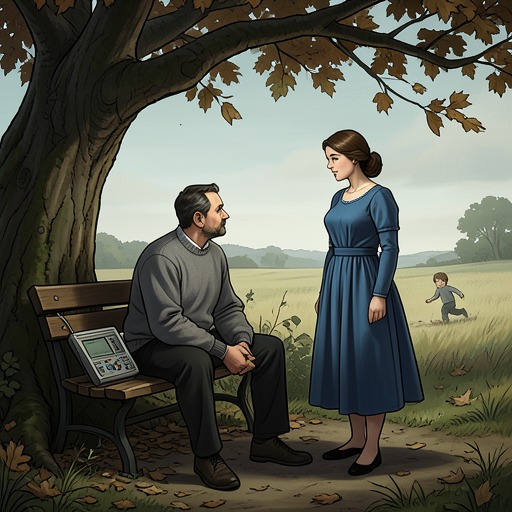
Russ’s recollection of their courtship presents Loralie as lively and confident rather than passive. He first saw her on Halloween when he was a cocky high-school senior and she was a freshman. After accepting a football-team challenge to wear a costume, Russ visited her home on her birthday with a bouquet of lilies and asked her to be his girl after waiting two hundred and twelve days. The story preserves Loralie through her gestures—giggling, bringing a hand to her chest, and meeting his nervous declaration with a question of her own. Her remembered personality helps explain why Russ continues to grieve her decades later and why her absence remains active within the McCoy household.
Illness, Death, and Travis’s Grief
Loralie is diagnosed with Acute Lymphoblastic Leukemia when Travis is nine. For two years, he watches her fight to get out of bed, undergo numerous rounds of chemotherapy, and pray for survival. Eventually, her body becomes too weak, and she dies when Travis is eleven. The abrupt finality of her death—Travis remembers that she went to sleep one night and did not wake the next morning—leaves him with a child’s incomplete understanding of illness and a lasting sense that he was unable to protect her.
Travis believes Loralie deserved better than a husband who withdrew into his workshop instead of caring for his dying wife. Because he was only a child, he could help as much as he was able but could not comprehend the full meaning of her sickness or impending death. He consequently directs his grief outward, blaming Russ for abandoning her and treating his father as cold-hearted. Their conflict is not merely a disagreement over parenting; it is a repeated argument over what Loralie’s final years meant and who failed her.
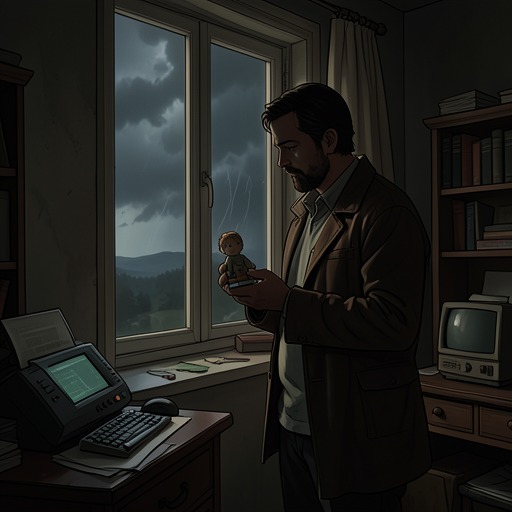
When Travis visits Loralie’s gravesite, he kneels only ten feet from his parked car, wraps his arms around himself, and pours out his heart to her. The scene shows grief returning after years of suppression: he wants to scream, cry, and retreat to a time before he doubted every decision he had made. Loralie’s grave becomes a place where the adult Travis can address the child he was and the mother he lost, even though she can no longer answer.
Loralie’s Influence on Travis’s Life
Loralie remains present in Travis’s behavior long after her death. He explains that he hated the public demands of professional football but tried to remain cordial because his mother would have condemned him for acting like a jerk. The memory of her imagined judgment disciplines him when fame and spectators press against his private identity. Football is also inseparable from his earliest memories of her support: during his first year of pee-wee football, she attended every moment of a game against Memphis, even though the team had not won a game that season. Travis’s team ultimately won by forty points, and he remembers her being there for all of it.
In retrospect, Travis recognizes signs that Loralie was already ill during that game. She had lost weight and tired easily, yet she tried to hide the weakness and remain strong for him. The memory therefore joins triumph to warning: the boy experiences a spectacular football victory, while the adult understands that the mother celebrating beside him was already fighting a life-threatening disease. Her support gives football emotional meaning, but her illness also exposes the limits of the sport’s promise. A victory cannot prevent loss, and achievement cannot restore the person who made it meaningful.
Loralie’s remembered voice also helps connect Travis’s childhood identity to his later fatherhood. As a boy, he asks whether she will record all of his games when he becomes a “big, bad football player.” As an adult, he confronts the cost of pursuing that dream: he has missed ten years of Max’s life while standing on the fifty-yard line before enormous crowds. The contrast does not erase the value of Loralie’s encouragement, but it forces Travis to decide whether professional football should continue to define his future. His eventual choice to prioritize Penelope and Max reflects a desire to offer his own child the presence he once received from Loralie—and to avoid reproducing the absences that damaged his family.
Memory, Reconciliation, and Legacy
Loralie’s death initially divides Russ McCoy and Travis. Travis interprets Russ’s retreat as abandonment, while Russ carries his own grief and does not know how to communicate it. Later, Russ explains that he still misses Loralie every day, hears her laughter, and imagines her smile. He also asks whether Travis would have returned to Clarendon if Loralie had revealed the pregnancy or if Russ had disclosed his suspicions that Max was Travis’s son. The question links two concealed truths—Loralie’s illness and Max’s parentage—to the family’s years of separation, showing how silence can protect an immediate hope while deepening later damage.
The family’s reconciliation depends partly on allowing Loralie to be remembered as a whole person rather than as evidence against Russ. Travis comes to see that the man he had regarded as a heartless father was instead a broken soul struggling with the loss of the woman he loved. He forgives Russ for abandoning him and finally accepts Russ’s love. Loralie’s memory thus changes function: it begins as the basis of accusation, becomes the subject of shared mourning, and ends as a bridge between father and son.
Her influence extends into Travis’s family with Penelope Stone and Max. Travis asks to change Max’s last name to McCoy because he wants Penelope, Max, and himself to be recognized as a real family. Max later calls him “Dad,” and while preparing to marry Penelope, Max warns Travis that it is his job to ensure he does not hurt her. These moments show fatherhood becoming an active social and ethical role rather than merely a biological fact. Loralie’s example stands behind that transformation: Travis’s understanding of what a parent should give a child is formed through both the care she offered and the loss that followed.
At Travis and Penelope’s wedding, Russ gives Travis a small black velvet box containing gold football cufflinks that Loralie ordered after she became sick, intending them for Travis’s wedding day. The gift turns an absent mother’s future hope into a present ritual. The wedding ceremony, held before rows of white chairs with gold satin bows, lanterns, and gold-and-ivory balloons beside the field, folds Loralie’s memory into the family’s new beginning. Her love is not represented by a generic blessing but by an object she selected while facing death.
Narrative Significance and Continuing Presence
Loralie’s final legacy is made literal after Penelope gives birth to a daughter. Travis receives the baby, notices that she looks like his mother, places a small brown teddy bear between the newborn and Penelope, and names the child Loralie. The name does not undo the earlier death; instead, it creates continuity across three generations and allows Travis to carry his mother’s identity into the family he has chosen and restored.
Loralie therefore functions as more than a deceased backstory character. Her illness explains the emotional origins of Travis’s resentment, her support shapes his relationship with football, her memory helps Russ and Travis revise their judgments of one another, and her wedding gift and namesake granddaughter turn mourning into inheritance. The narrative repeatedly returns to her through the gravesite, family photographs, remembered games, Russ’s stories, and the objects she left behind. Each return changes what her absence means: first an unbearable loss, then a source of conflict, then shared evidence of love, and finally a foundation for renewed family life.